🎧 Prefer to listen? Click here to listen to this episode on your favorite podcast player.
You’re probably hearing that if you have a podcast, you NEED to be on video right now. YouTube is king. If you’re not showing your face, you’re completely missing out.
But what if the data tells a completely different story?
Let me share what a recent industry report reveals about how people actually consume podcasts – and why the pressure to go all-in on video might be the thing holding you back from ever launching your show.
The Data Might Surprise You
A report from Cumulus Media and Signal Hill Insights published last year reveals how people consumed podcasts in 2025. Here are the key findings:
- Audio remains the primary mode of podcast consumption, despite growing video options
- Over half of weekly podcast consumers consume via audio primarily
- Only 4% of podcast consumers watch video exclusively
- YouTube draws audiences and leads as a discovery platform, but listeners use a mix of platforms
Here’s a quote from Liz Mayer, Senior Insights Manager at Cumulus Media, that really stuck with me:
“First and foremost, podcast consumption remains an auditory experience. There is no denying that YouTube is playing an important role in the podcast ecosystem, especially when it comes to discovering new podcasts. However, over half of weekly podcast consumers indicate they consume via audio primarily. So while the new video capabilities are exciting and need to be focused on, the industry can’t forget that it’s what consumers are hearing that is most important.”
That last line is key: It’s what consumers are hearing that is most important.
Our Experience Backs This Up
This lines up exactly with what I’ve seen working with hundreds of podcasters over the years, including clients who get only a handful of views on their YouTube videos while pulling in significantly more audio downloads per episode. This points to the fact that video, and specifically posting episodes on YouTube, requires a completely different strategy.
We even offered video editing as a service at PodAssist. We ran it for 9 months in 2023. We brought on a video editor, worked with clients, got a real behind-the-scenes look at what it takes.
And then we pulled the plug and decided to stay in our lane – audio-only.
The data and our experience told the same story.
The ROI Question
Look, I’m not going to discourage anyone from exploring video if that’s the route you want to go. But you really have to look at the ROI – the return on investment.
Think about what full video production actually requires:
Pre-production time: Setting up lighting, camera angles, making sure everything looks right. There’s a lot more involved than plugging in a microphone and talking into it with the camera shut off.
Post-production time: Editing video is time-consuming. You’re creating thumbnails. YouTube is a whole other ballgame. As already mentioned, if you’re going to focus there, channel management and optimization come into play. It’s a completely different beast.
Energy: Being “on” visually, not just vocally, requires a lot more energy. I remember one podcaster we worked with who said in her intro, “I do this podcast so I don’t have to wear makeup.” That line has stuck with me to this day.
Money: If you’re hiring someone to edit your videos and manage a YouTube channel, that can add up fast.
Being everywhere sounds great in theory. But if the data shows that most people are consuming via audio anyway, is that time and money investment worth it to you?
That’s a question only you can answer for your show.
I’m Not Anti-Video
Let me be clear: I’m not anti-video. I consume a ton of short-form content myself. I’m a big fan of it.
And YouTube absolutely plays an important role in discovery (the report absolutely confirms that).
This isn’t about video being bad. It’s about making smart choices about where you invest your time and resources, and ultimately making the best decision for you.
My Contrarian Take (And I Own It)
I’ll be honest – I’ve never sat down and watched a full podcast episode on YouTube. Even when I’m not working on podcasts, I’m consuming them by audio with earbuds in as I’m moving around.
I know I’m old school and probably biased here. I started listening to audio podcasts back in 2013.
Here’s the thing: “Podcast” comes from “pod” (listening on your iPod) and “cast” (short for broadcast). It’s rooted in audio.
Video has been awesome for podcasting, there’s no question about that. For discoverability, for making it more popular, bringing things mainstream. But it also has blurred the lines.
People see a big name sitting at a table and they think that’s what a podcast is right now.
My take? Those are video shows, not necessarily podcasts, or at least not podcasts in their original form. In that way, the medium is being confused a little bit by video.
Your Permission Slip
Here’s your permission slip, and this time it’s backed by actual data:
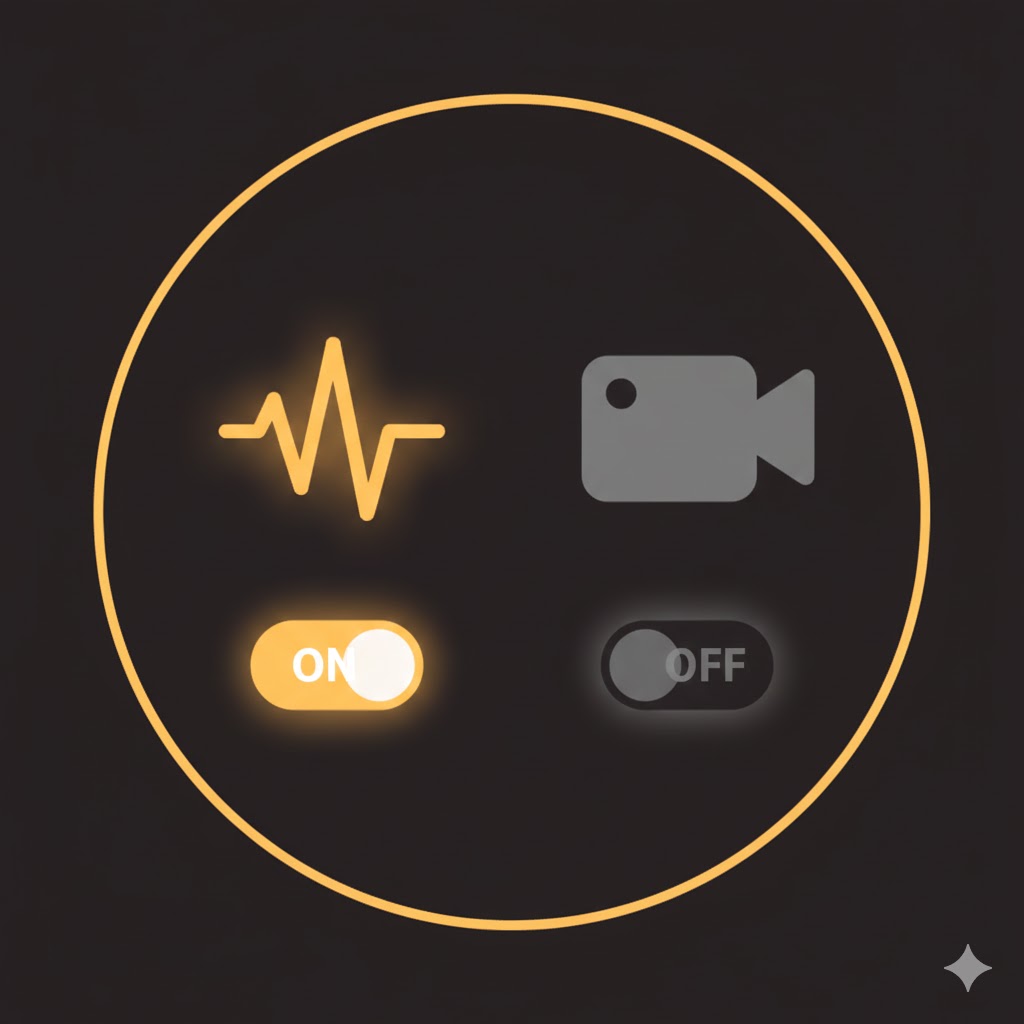
Start your podcast with audio. Just audio.
Video helps with discoverability, sure. But audio is still king for actual consumption.
Don’t let the video aspect hold things up. You can always add video later if you want to.
But If You DO Want Some Video Presence…
The report shows YouTube is important for discovery. So here are three ways you can get that benefit without burning yourself out on full video production:
Option 1: “Magic Clips” Strategy
Tools like Riverside, Descript, or Opus Clip can use AI to generate “magic clips”, or key points from your episode. You can share just those short video clips on YouTube, Instagram, or wherever, directing people to your audio podcast.
You’re getting video benefits without editing full episodes. Some of our current clients are doing this successfully.
Option 2: RSS-to-YouTube Strategy
Many podcast hosts can auto-push your episodes to YouTube every time you publish. You don’t have to do anything at all.
It shows a static image of your cover art instead of video. That way you’re getting exposure on the world’s biggest search engine, Google (which owns YouTube, the second), without doing any video editing work (you could also create a custom image for each episode and manually upload it to YouTube to display while the video is playing).
You’re leveraging YouTube for discovery while keeping your focus on audio, and you’re not really doing anything extra other than maybe setting up a YouTube channel.
Option 3: Cinematic Trailer
Create one short cinematic trailer using B-roll footage or any video you have on hand. This introduces people to you and your brand in a video format, but you’re not editing video episodes each week.
You can pin it on your YouTube channel, your social pages, your website. It’s really a commercial for you, an advertisement. It’s a one-time investment with no ongoing video work per episode.
I know a great person named Justin who does awesome work on these trailers, and you can check out his work and reach out to him at https://justinhazouri.com/.
The Bottom Line
The data is clear: Audio is still how most people consume podcasts.
Video isn’t bad. It’s got A LOT of good points. But it’s also not required to just get started.
If video pressure has been holding you back from launching your podcast, give yourself permission to start with audio. Keep it simple. Keep it sustainable. You’ll actually show up consistently.
And if you do want some video presence, you’ve got options that won’t lead to burnout.
*****
Want to talk about your podcast idea? I offer no-obligation calls where we can brainstorm your concept, talk through your hurdles, and see if working together makes sense for your goals.
You can book a discovery call right by clicking HERE or feel free to connect with me over on LinkedIn to share your thoughts on this episode.